Best Hand Pump Reverse Osmosis and Water Filtration Solutions for Off-Grid Water
Direct answer: For portable, hand-powered water purification that relies on reverse osmosis or advanced filtration, the Katadyn Survivor 06-LS-RES and FS-TFC Portable Reverse Osmosis System are strongest fits for roving crews and emergency kits, while other hand-pump systems offer solid backup options for camping and hiking. This guide helps buyers choose among compact desalination units, multi-stage purifiers, and reliable hand-pump filters. The top picks vary by use case, including survival kits, boats, backpacking, and bug-out bags.
Buyer profiles:
– Best for lifesaving, compact desalination in maritime or raft scenarios.
– Best for field water purification with a focus on RO filtration for trusted purity.
– Better for lightweight backpacking with fast flow and multi-stage filtration.
– Choose this if you need solar-assisted or hand-pump backups for emergencies.
– Ideal for groups needing portable filtration with minimal maintenance.
Product Comparison snapshot
- Katadyn Survivor 06-LS-RES — Best for marine survival and groups needing desalination in a compact form.
- FS-TFC Portable RO System — Best for true reverse osmosis on the go with high purity goals.
- Trailgo Pro — Best for camping groups needing fast, reliable hand-pump filtration.
- BKLES 3-in-1 Solar Electric Filter — Best for solar-enabled or hand-pump versatility.
- Survivor Filter PRO — Best for rugged backpacking with compact design and high contaminant removal.
Katadyn Survivor 06-LS-RES Hand-Powered Desalinator

Key data: This model is described as the world’s smallest hand-powered desalinator with reverse osmosis capabilities. It produces up to 5.7 gallons of fresh water per day at a steady 40 strokes per minute, a daily capacity suitable for groups of 1–6 where space and weight are critical. The energy-recovery pump is designed to lower pumping effort per gallon, easing fatigue in survival situations. Best for small boats, life rafts, and ditch bags where reliable desalination is essential. Limitation: manual pumping remains labor-intensive for longer deployments; consider fatigue management and spare time for pumping.
Who it’s best for
- Maritime users and survival kits needing desalinated water.
- Groups prioritizing compact, rugged design and low energy use per gallon.
Why this selection
- RO desalination in a hand-powered, compact form.
- Energy-recovery mechanism increases efficiency per stroke.
Notes
Best to avoid if you require ultra-high throughput or minimal manual effort without backup power.
FS-TFC Portable Reverse Osmosis System

Key data: This system emphasizes high-precision filtration with a 0.0001-micron RO membrane and triple-stage filtration, including prefiltration. It targets a high level of contaminant removal, including fluoride, arsenic, chlorine, lead, and heavy metals. It supports outdoor use for hiking, camping, travel, and emergencies. It is designed for direct pumping into bottles or hydration packs, with a suggested flow of about 300 ml (10 oz) per 20 pumps. Caution: setup complexity and maintenance cycles can affect performance. Best for users who want robust RO filtration in a compact outdoor unit.
Who it’s best for
- Hikers and campers needing true reverse osmosis filtration.
- Emergency preppers seeking strong contaminant removal in the field.
Why this selection
- RO filtration targets the widest range of dissolved contaminants.
- Portability for camping and travel without heavy equipment.
Notes
Performance depends on water source quality; best used with relatively clean intake water or after prefiltration.
Trailgo Pro Water Filter for Camping

Key data: The Trailgo Pro is a portable hand-pump water purifier designed for 1.5 liters per minute, serving 4–6 hikers or a small family. It features a 3-stage filtration with bacteria, parasites, sediment, and chlorine removal, suitable for use with streams, lakes, and rainwater. Best for backpacking and group camping where weight and speed matter. Limitation: purification level may be lower than RO systems; best for sources with moderate contamination and after prefiltration if needed.
Who it’s best for
- Hikers, campers, and small survival groups needing quick water purification.
Why this selection
- Fast flow for group use and easy packing in a backpack.
- Three-stage filtration covers common contaminants found in wild water sources.
Notes
Not a substitute for chemical disinfection in highly contaminated water; consider combining with boiling or chemical treatment when in doubt.
SurviMate Water Purifier Survival Pump
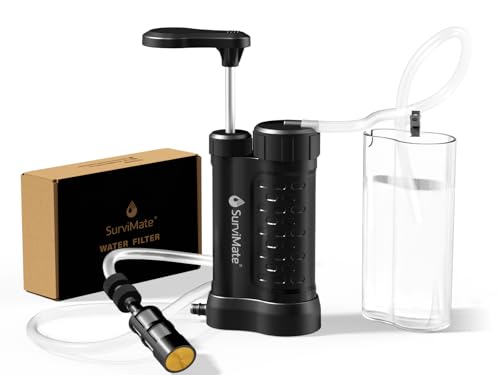
Key data: The SurviMate system uses a 0.01-micron hollow fiber ultrafiltration membrane and offers a 5-stage filtration, delivering up to 1,500 ml (58 oz) per minute. It provides rapid purification from various fresh water sources and claims the ability to filter up to 793 gallons (3,000 liters) before replacing the carbon component. Best for large groups on hikes or multi-person camping trips. Caution: the lifespan of the carbon element depends on water quality; plan for maintenance and part replacement in longer trips.
Who it’s best for
- Groups needing fast purification while on the move.
Why this selection
- High flow for a handheld unit, suitable for multiple users.
- Multi-stage filtration targets a broad range of contaminants.
Notes
As with any ultrafiltration system, ensure the intake water is not excessively turbid; consider pre-filtration if required.
Buying Guide: Key Considerations for Hand-Pump RO and Filtration
- Filtration type: RO systems remove dissolved salts and many contaminants, while multi-stage ultrafiltration handles bacteria and particulates. RO generally offers higher purity but may be slower or more mechanically demanding.
- Flow rate and capacity: Determine daily water needs and choose models with appropriate throughput. Higher flows help groups and longer field deployments.
- Weight and portability: For backpacking or raft kits, compact dimensions and lighter weights matter more than bulkier units.
- Source water compatibility: Some units are designed for saltwater or brackish water, others are optimized for freshwater. Check ratings and recommended use cases.
- Power and redundancy: Solar or manual pumping options provide resilience. Hand-pump backups are valuable during power outages or remote trips.
- Maintenance and consumables: Reusable carbon or filter replacements affect long-term costs and field readiness. Plan for replacement parts and consumables.
- Durability and reliability: Look for rugged housings, corrosion-resistant materials, and validated lab testing where available.
- Ease of use: In survival scenarios, intuitive operation and quick setup reduce risk and fatigue.
FAQ
- What is the main advantage of a hand-pump RO system?
– It provides true reverse osmosis filtration in a portable, manual format, enabling desalination or high-purity drinking water without electricity. - Can hand-pump filters remove fluoride and heavy metals?
– Some systems, like RO units and advanced multi-stage filters, target fluoride and heavy metals; check the product specs for exact claims. - Which setup is best for a freshwater camping trip?
– A compact three- to five-stage purifier with a reliable hand-pump is ideal for small groups, focusing on flow rate and ease of use. - Is desalination necessary for inland trips?
– Desalination is mainly for marine or saltwater scenarios. For inland water, RO purification from freshwater sources or ultrafiltration is usually sufficient. - How often should I replace carbon components in portable purifiers?
– Replacement frequency depends on usage and water quality. Expect longer intervals with clean sources and shorter lifespans with highly contaminated water.
Leave a Reply