Best Organic Non-Gmo Microgreen Seeds for Home Grown Greens
Looking for organic, non-GMO microgreen seeds you can grow at home? This guide highlights five top options that are well-suited for beginners and seasoned growers alike. Each product is evaluated on germination ease, variety, and suitability for indoor or outdoor growing. Use this to decide which seed blend best fits your space, timeline, and taste preferences.
Summary table of selected products:
| Product | Best For | Growing Style | Key Benefit |
|---|---|---|---|
| Nature Jim’s Sprouts Organic Salad Mix | All-around salad microgreens | Indoor/Outdoor | Fast 5-day harvest |
| SproutMe Microgreens & Sprouting Seeds Variety Pack | Variety lovers | Indoor/Outdoor | 10 varieties in one pack |
| Seedboy Organic Non-GMO Sprouting Seeds, Fresh Salad Blend | Health-focused households | Jar sprouting or trays | USDA Organic, multiple greens |
| Nature Jim’s Organic Broccoli Sprouting Seeds | Quick, dense broccoli sprouts | Indoor/Outdoor | 5-day sprouts |
| Bio Naturo Organic Microgreen Sprouting Seeds 6-Pack | Experimenters and beginners | Indoor | 6 varieties, easy to grow |
Nature Jim’s Sprouts Organic Salad Mix
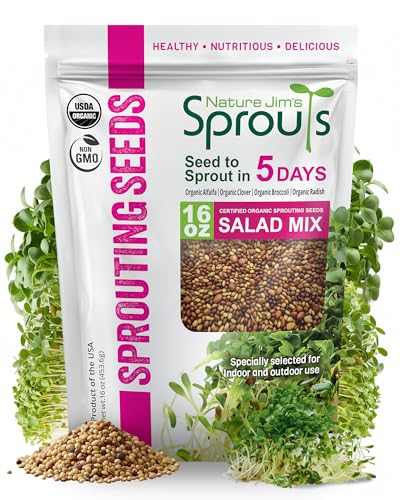
Type: Organic, Non-GMO seeds blend. Content includes broccoli, alfalfa, radish, and clover for a versatile microgreen salad mix.
Best for: Home cooks who want a ready-to-grow mix that yields a flavorful, nutrient-dense microgreen salad in a short time.
Why selected: The mix combines popular greens in one package, offering quick harvests and straightforward care for beginners and busy households seeking consistent results.
Limitations: As a mixed seed blend, color and flavor balance may vary between batches, affecting uniformity in flavor.
SproutMe Microgreens & Sprouting Seeds Variety Pack
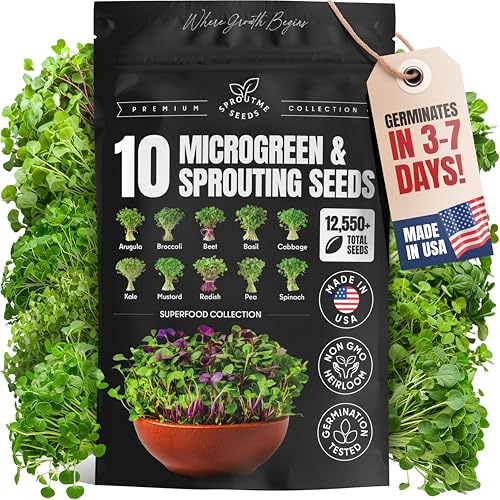
Type: 10-variety mix including arugula, beet, basil, broccoli, cabbage, kale, mustard, pea, radish, and spinach.
Best for: Gardeners who want a broad spectrum of flavors and textures from a single purchase, suitable for both indoor trays and outdoor beds.
Why selected: A large, clearly counted seed pack with high germination potential offers flexibility for year-round growing and experimentation with flavors.
Limitation: The variety pack may be overkill for someone seeking a single-species focus or a small starter set.
Seedboy Organic Non-GMO Sprouting Seeds, Fresh Salad Blend

Type: Organic salad blend including alfalfa, broccoli, mung bean, lentil, and radish seeds.
Best for: Small-space growers who want a complete, nutrient-dense mix with simple jar sprouting and quick results.
Why selected: The blend emphasizes versatility and nutrient density, with a focus on easy, fast harvests in a home setting.
Limitation: Data notes seeds may require careful rinsing and steady moisture to avoid mold in crowded setups.
Nature Jim’s Organic Broccoli Sprouting Seeds

Type: Organic, non-GMO broccoli sprouting seeds.
Best for: Growers who want dense, broccoli sprouts with a quick turnaround for salads and sandwiches.
Why selected: Broccoli sprouts are known for sulforaphane and rapid growth, making them a popular choice for nutrient-dense microgreens.
Limitation: As a single-species seed, it lacks the variety some cooks prefer for mixed microgreen bowls.
Bio Naturo Organic Microgreen Sprouting Seeds 6-Pack

Type: Six-variety organic, non-GMO heirloom seeds including sunflower, arugula, beetroot, radish, cress, and alfalfa.
Best for: Beginners and experimenters who want a structured starter kit with multiple microgreen options in one package.
Why selected: The 6-pack format offers a gentle introduction to different flavors and textures, with practical indoor growing potential.
Limitation: Some gardeners may prefer single-variety packs for targeted flavor profiles or specific recipes.
Buying Guide
What should I look for in organic non-GMO microgreen seeds?
Look for certified organic and non-GMO labels, clear germination rates, and a variety that matches your growing space. Heirloom seeds can offer stable flavors and reliable sprouting times, while blends give versatility for meals.
Which seed type is best for beginners?
Mixed seed packs with simple, fast-growing greens (like broccoli, alfalfa, radish, and arugula) are ideal for beginners. They provide quick rewards and straightforward care in jars or shallow trays.
Indoor vs. outdoor growing considerations
Indoor sprouting typically requires jars or shallow trays, consistent moisture, and good drainage. Outdoor sowing may benefit from soil beds or raised planters, but check your climate and length of growing season.
How to ensure high germination and freshness?
Store seeds in a cool, dry place away from direct sunlight. Use seeds from reputable brands with clear packaging dates and germination information. Rinse and drain sprouts as directed to avoid mold and spoilage.
How to compare different packs?
Compare the variety count, estimated total seeds, and intended use (sprouting jars vs. soil planting). Consider whether you want a single-species option for focused flavor or a multi-species mix for culinary versatility.
What about safety and quality?
Choose seeds labeled USDA Organic or certified non-GMO and sourced from trusted suppliers. Avoid blends with unknown ingredients or unclear origin.
FAQ
- Q: How fast can I harvest microgreens from seeds?
- A: Many varieties are ready in 5–14 days, depending on light, moisture, and seed type.
- Q: Are these seeds truly non-GMO?
- A: Yes, all listed seeds specify non-GMO or organic certification where noted.
- Q: Can I grow these indoors without special equipment?
- A: Yes, most seeds are suitable for jars, trays, or shallow planters with basic moisture management.
- Q: Which pack should I start with for a beginner?
- A: A mixed-pack like Nature Jim’s Salad Mix or SproutMe’s Variety Pack offers quick, varied results with minimal setup.
- Q: How should I store these seeds for best germination?
- A: Store in a cool, dry place in sealed packaging away from heat and humidity.
Leave a Reply