Best Green Tea Powder for Baking: Top Matcha Picks for Home Bakers
Find the right green tea powder for baking with trusted culinary-grade matcha. This guide highlights five options suited for lattes, smoothies, cookies, cakes, and other desserts. Best for beginners, daily bakers, and wellness enthusiasts who want a calm energy boost without jitters. The featured products emphasize organic sourcing, smooth texture, and reliable culinary performance for baking and beyond.
| Product | Size / Format | Best For |
|---|---|---|
| Jade Leaf Matcha Organic Culinary Grade (30 g) | 30 g pouch | Everyday baking and beverages |
| FGO Organic Matcha Green Tea Powder (4 oz) | 4 oz bag | Lattes, smoothies, and baking |
| MatchAiA Organic Matcha Powder (60 g) | 60 g pouch | Culinary versatility and desserts |
| Maestri House Organic Culinary Matcha (3.53 oz) | 3.53 oz | Lattes and baked goods |
| MATCHA DNA Organic Matcha Powder (16 oz) | 16 oz tin | Everyday uses, smoothies, and baking |
Note: Each product below is evaluated for baking suitability, texture, and color when whisked or sifted into recipes. Where relevant, the sections reference the product’s features to explain why it’s a solid choice for baking tasks and flavor outcomes.
Jade Leaf Matcha Organic Culinary Grade Matcha Powder

Best for: daily bakers who want consistent color and flavor without off-notes. This culinary-grade matcha is harvested in Japan and packed in a resealable pouch for long-term freshness. It’s suited for cookies, cakes, and baked custards where a clear green hue and mild sweetness are desirable.
- Certified organic, vegan, gluten-free, and dairy-free
- Low caffeine with L-theanine for steady energy
- Ideal for coffee switchers and wellness-focused recipes
Limitations: Large bulk options exist; for small-batch bakers, the 30 g size may require more frequent purchases. Best when stored in a cool, dark place to preserve color and aroma.
FGO Organic Matcha Green Tea Powder

Best for: home bakers seeking a reliable, smooth powder that dissolves easily in lattes, smoothies, and baked goods. The product is designed for whisking into drinks or mixing into batter without clumping.
- Authentic matcha with a clean green color
- Calm, focused energy profile similar to other culinary grades
- Great for baking, as it dissolves smoothly in mixtures
Limitations: Not all batches are explicitly labeled for cookie or cake texture; results may vary with different sugar levels or dairy substitutes. Store tightly to maintain freshness.
MatchAiA Organic Matcha Powder

Best for: cooks who want a premium grade with robust flavor for custards, cookies, and green-tea desserts. The powder’s USDA organic certification and stone-ground processing help preserve nutrients and flavor.
- USDA organic certification
- Premium traditional craftsmanship with stone grinding
- Versatile for lattes, smoothies, and baking
Limitation: As a premium product, it may be priced higher than standard culinary grades, so budget-minded bakers should balance cost with batch size.
Maestri House Organic Culinary Matcha Powder
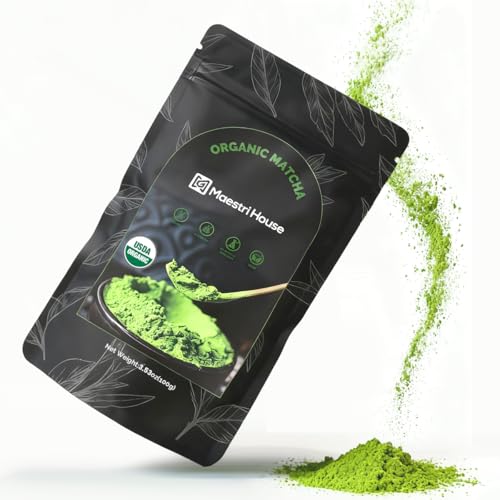
Best for: bakers who want an unsweetened, versatile matcha that works across beverages and desserts. This product emphasizes organic sourcing and suitability for both hot and cold preparations.
- Unsweetened, USDA Organic, vegan, Non-GMO
- Designed for lattes, baking, and desserts
- Suitable for those controlling sweetness in recipes
Limitation: The packaging size is moderate; frequent use in high-volume baking may require reordering sooner than larger formats.
MATCHA DNA Organic Matcha Powder

Best for: cooks seeking a large, versatile supply for frequent baking and beverage use. This 16 oz tin provides bulk value while maintaining organic quality and a smooth finish for desserts and confections.
- USDA certified organic, gluten-free, vegan
- High antioxidant content and L-theanine
- Great for lattes, smoothies, and baked goods
Limitation: The large tin may require steady storage space and proper sealing to maintain freshness over time.
Buying Guide: Key Factors For Choosing Green Tea Powder For Baking
What grade should I choose for baking?
Culinary-grade matcha is typically recommended for baking because it offers vibrant color and a clean, balanced flavor without the more delicate notes found in ceremonial grades. It blends well into doughs and batters without overpowering other ingredients.
How does packaging affect freshness?
Look for airtight pouches or tins with resealable closures. Light, heat, and air degrade color and flavor, so store in a cool, dark place. Smaller sizes are convenient for beginners; larger formats save money for frequent bakers.
What about organic and non-GMO claims?
Organic certification indicates farming practices that avoid synthetic pesticides and fertilizers. For those who prioritize sustainability and natural ingredients, organic options are common in baking-focused matcha.
Is price a good indicator of quality?
Higher price can reflect premium sourcing, less processing, and certification. However, for everyday baking, mid-range options often provide excellent color and aroma. Consider batch size and intended use when evaluating value.
How should matcha be used in recipes?
Begin with ½ to 1 teaspoon per cup of liquid when adding to beverages, and adjust to taste in cookies or cakes. For baking, sift matcha with dry ingredients to avoid clumps and ensure even color distribution.
Storage and shelf life considerations
Keep matcha in a cool, dark place and refrigerate after opening if possible. Avoid moisture exposure and reseal tightly after each use to maintain aroma and color.
Frequently Asked Questions
- What is the difference between ceremonial and culinary grade matcha for baking? Answer: Culinary grade is designed for cooking and baking with a more robust flavor and color, while ceremonial grade is finer, milder, and typically reserved for traditional tea drinking.
- Can I use regular green tea powder for baking instead of matcha? Answer: Regular green tea powder may lack the concentrated flavor and vibrant color of matcha. For best results in baking, use a true culinary matcha.
- Is matcha suitable for gluten-free baking? Answer: Yes, matcha itself is gluten-free and can be incorporated into gluten-free recipes, though recipe adjustments may be needed for texture.
- How do I know if matcha has gone bad? Answer: Fresh matcha should have a vibrant green color and fresh, grassy aroma. Rancid or flat smells indicate degradation; if in doubt, discard.
- Should I use hot or cold water when mixing matcha for baking? Answer: Start with room-temperature to slightly warm liquids to help dissolve the powder before adding to batter or dough to avoid lumps.
- What’s the best way to store matcha long-term? Answer: Store in a sealed, opaque container in a cool, dark place; refrigeration can extend freshness for open tins or pouches.
Leave a Reply