Best Oxygen Absorber Packets for Food Storage: Extend Freshness and Shelf Life
Answer: These oxygen absorber packets are designed to slow spoilage and maintain flavor, color, and texture in dry foods when stored in Mylar bags, jars, or vacuum-sealed equipment. They are best for home preppers, bulk pantry organizers, and anyone seeking long-term storage without frequent rotation. This guide selects five reliable options and explains who each is best for, plus practical buying tips.
The following table compares the selected products at a glance.
| Product | Capacity | Pack Format | Key Benefit | Best For |
|---|---|---|---|---|
| LIFJOY 120 Packs 500CC | 500cc per absorber | 10 packs per vacuum bag; 12 packs total in box | Large-volume storage in Mylar or jars | |
| LinsKind 110 Packs 100CC | 100cc per absorber | 10 packs per vacuum bag; 11x packs total | Smaller portions; easy UV sealing | |
| Zeefpod 400 Counts 500cc | 500cc per absorber | 10 packs ( ~40 absorbers each ) in vacuum packs | One-gallon or larger containers | |
| O2frepak 200CC 100-Pack | 200cc per absorber | Vacuum bag with 100-pack set | Medium-to-large storage with flexibility | |
| Hombao 200 Packs 500CC | 500cc per absorber | 10 packs per vacuum bag | Oil-prone foods; diverse storage |
LIFJOY 120 Packs 500CC Oxygen Absorbers

Best for high-volume storage where long-term freshness is essential. Each absorber targets up to 500cc of oxygen, supporting large Mylar bags, mason jars, or vacuum bags. The kit includes an oxygen indicator to verify usability on arrival, helping buyers confirm readiness before sealing containers. The product is positioned for bulk pantry setups or preparedness storage where multiple servings of dry goods are stored together.
Best for: households or small businesses needing many absorbers at once. The high capacity supports bulky staples like grains and flours. Caution: color indication is the primary quality check; verify indicator color as directed before use.
LinsKind 110 Packs 100CC Oxygen Absorbers

Consider for smaller batches or frequent resealing needs. Each 100cc absorber is compact, with 11 x packs of 10, and a built-in oxygen indicator. The packaging reduces waste by delivering 10 packs per vacuum bag, simplifying storage and reducing overexposure to air. This option suits cooks or hobbyist storage scenarios where only a few absorbers are needed at a time.
Best for: compact storage and easy portioning. Limitation: lower capacity per absorber may require more units for very large containers.
Zeefpod 400 Counts 500cc Oxygen Absorbers

Best for users aiming to stockpile in larger containers, such as 1-gallon Mylar bags or jars. Each absorber removes about 500cc of oxygen, making it effective for extensive storage needs. The ten-pack vacuum design minimizes exposure and preserves potency between uses. Suitable for staples like grains, beans, and cereals.
Choose this if you store in large volumes and want strong, consistent performance across a long shelf life. Limitation: high-capacity absorbers may be more than needed for small storage projects.
O2frepak 200CC 100-Pack Oxygen Absorbers
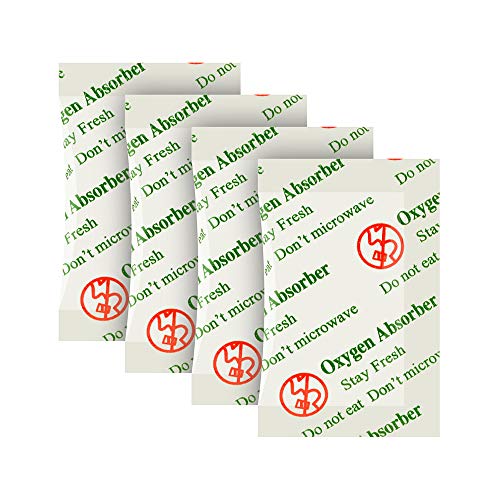
Best for balanced storage needs, offering 200cc per absorber with a concentration on three-times absorption capacity claims. The product notes anti-oil functionality, making it adaptable for foods with higher oil content. The vacuum-pack approach reduces exposure and supports longer shelf life for mixed pantry items.
Better for: storage scenarios where moderate absorber capacity and oil compatibility matter. Caution: verify oil compatibility for highly fatty foods and follow sealing guidelines to avoid overexposure before use.
Hombao 200 Packs 500CC Oxygen Absorbers

Best for versatile storage, including nuts, spices, grains, pet foods, and even some pharmaceuticals. Each 500cc absorber is packed in 10-pack vacuum groups with color-coded packaging for quick identification of potency. The design includes an anti-oil film to support use with oil-prone foods and a robust direct contact safety profile.
Choose this for wide compatibility with various dry foods and for users who value quick potency checks via color coding. Limitation: high-capacity absorbers require careful sizing to avoid over-drying or unnecessary usage in small containers.
Buying Guide
What should I consider when choosing oxygen absorbers?
- Capacity: Larger capacity absorbers remove more oxygen per unit; match to container size (1-gallon bags vs. smaller jars).
- Packaging: Vacuum-sealed packs reduce exposure and extend potency; consider whether you want 10 packs per bag or multiple absorbers in one bag.
- Material safety: Look for food-grade materials and ISO or equivalent certification to ensure safety for foods and pharmaceuticals storage.
- Indicator: An oxygen indicator helps verify readiness on arrival and before storage.
- Oil compatibility: If storing oily foods, choose absorbers designed to work with oil-prone items.
How many should I use per container?
Follow the supplier guidelines for container size and oxygen removal capacity. For larger containers like 1-gallon Mylar bags, multiple absorbers may be appropriate. For small jars or portions, smaller capacity absorbers or fewer units per container can suffice, depending on the target shelf life.
Are there any storage or usage cautions?
- Do not rely on absorbers alone for wet or humid environments; ensure containers are dry and airtight.
- Always check the oxygen indicator before use, and reseal packs to minimize exposure when not in use.
- Note that absorbers remove oxygen, not air; the remaining air still contains moisture and other gases.
What storage containers work best with oxygen absorbers?
- Mylar bags with heat sealing; compatible for long-term dry food storage.
- Airtight jars with screw-on lids for easy access and portion control.
- Vacuum-sealed bags for maximum oxygen removal and extended shelf life.
How to verify product quality?
Look for manufacturers with long-standing experience, ISO/CE certifications, and clear indication of food-grade materials. The presence of an oxygen indicator and properly sealed packaging improves reliability for storage readiness.
FAQ
- Q: Do oxygen absorbers expire? A: They are most effective when stored dry and undamaged; check packaging and indicators for freshness.
- Q: Can I reuse absorbers after opening a pack? A: Reuse is generally not recommended; reseal unused absorbers to maintain potency for future use.
- Q: Will absorbers affect taste or smell? A: When used as directed with food-grade materials, absorbers are designed to be neutral and safe for storage.
- Q: What sizes of containers work best? A: Large containers like 1-gallon Mylar bags or clear mason jars are common; choose capacity to match storage needs.
- Q: Are absorbers safe for stored pharmaceuticals? A: Use only products labeled for food and pharmaceutical storage when applicable and follow manufacturer guidelines.
Leave a Reply